
More Than a Percentage: Understanding Old Testament Sacrifices

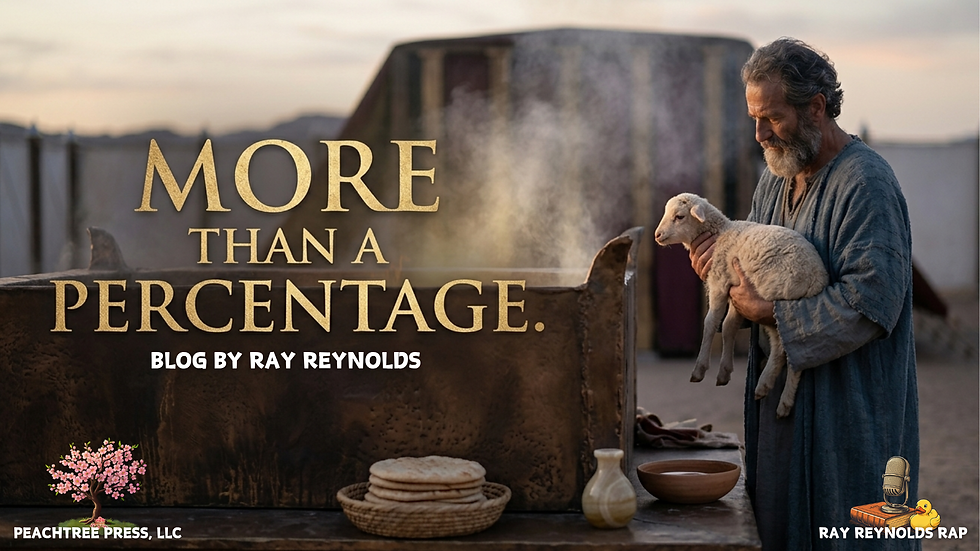
If the tithe was the baseline of mandatory giving in Israel, the sacrificial system was where giving became deeply personal, costly, and descriptive. Long before Jesus walked the earth, every single drop of oil poured out and every animal brought to the altar was a physical shadow pointing toward a spiritual reality.
Anchored in Genesis
Sacrifice was built into the fabric of humanity's relationship with God right from the beginning. We see altars built by Noah after the flood, Abraham throughout his wanderings, and Jacob at Bethel. These weren't mechanical duties; they were moments of deep surrender, gratitude, and covenant alignment.
The 5 Levites offerings
In the book of Leviticus, God outlines five specific offerings. Understanding the unique purpose of each one changes how we view generosity today:
The Burnt Offering (Leviticus 1) – Total Surrender
The entire animal was consumed by fire. Nothing was held back, symbolizing the worshiper's complete devotion and total commitment to God.
The Grain Offering (Leviticus 2) – Gratitude
A non-blood offering of fine flour, oil, and frankincense. It honored God simply as the provider of daily bread and the harvest.
The Peace Offering (Leviticus 3) – Fellowship
A voluntary communal meal shared between God, the priest, and the worshiper. It was a beautiful celebration of harmony and thanksgiving.
The Sin Offering (Leviticus 4) – Purification
Focused on cleansing the individual and the sanctuary from unintentional sins or ceremonial uncleanness.
The Trespass/Guilt Offering (Leviticus 5) – Restitution
Required when a sin caused a quantifiable loss to God or a neighbor. It uniquely required paying back full damages plus a 20% penalty alongside the sacrifice.
TOTAL SURRENDER GRATITUDE FELLOWSHIP
[ Burnt Offering ] [ Grain Offering ] [ Peace Offering ]
(All consumed) (Daily provider) (Communal meal)
Firstfruits and Freewill
Beyond these, Israel practiced two beautiful forms of giving that required immense faith:
Firstfruits (Bikkurim): Bringing the very first of the harvest to God before knowing how the rest of the crop would turn out. It was an act of raw trust that God would bless the remainder (Proverbs 3:9-10).
Freewill Offerings (Nedabah): Completely voluntary gifts given purely out of spontaneous love and affection for God.
When we look at this intricate system, we see that God never wanted a flat, unthinking payment. He wanted sacrifices that reflected every shade of the human experience—grief over sin, gratitude for food, and absolute surrender of life.
If your giving was categorized by the offerings above, would it look more like a routine "sin offering" or a joyous, voluntary "peace offering"?
You are loved.
Ray Reynolds
#gettingtoknowyourBible #gospel #contribution #offering


Comments